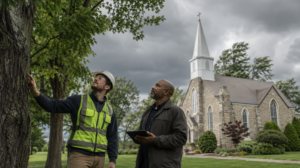
Churches are more than buildings. They are places of worship, gathering, comfort, service, teaching, outreach, and community life. On any given week, a church property may welcome families for Sunday services, children for youth ministry, volunteers for food pantry work, seniors for Bible study, staff for office hours, and guests who are walking through the doors for the very first time. That means church safety is not only about what happens inside the sanctuary. It also includes the parking lot, sidewalks, playgrounds, courtyards, memorial gardens, entryways, fellowship areas, and every tree standing near the property.
Before the next storm arrives, every church should take a serious look at the health and safety of its trees. Strong winds, heavy rain, lightning, snow, ice, and saturated soil can turn a weak limb or unstable tree into a major hazard. A falling branch can damage a roof, crush a vehicle, block an entrance, take down power lines, or injure someone on church grounds. The difficult part is that many tree problems are not obvious to the average person. A tree can look peaceful and beautiful from the outside while hiding decay, root damage, disease, structural weakness, or storm vulnerability.
That is why having a Certified Arborist involved before severe weather strikes is one of the wisest property decisions a church can make. A healthy tree can add beauty, shade, history, and warmth to a church campus. A neglected tree can become an expensive and dangerous emergency. Churches are called to be good stewards of what God has entrusted to them, and that includes caring for the land, the buildings, and the people who gather there.
Church Property Safety Starts Outside the Front Door
When churches think about safety, they often focus on doors, lighting, security cameras, emergency exits, nursery check-in systems, background checks, and fire alarms. Those things matter. However, the outdoor areas of a church property deserve the same level of attention. Many people interact with a church property before they ever enter the building. They park under trees, walk beneath branches, unload children near curbs, gather near entrance signs, or stand outside talking after service.
Trees are often part of the first impression a church gives. Mature oaks, maples, pines, elms, and other large trees can make a campus feel welcoming and established. They can frame a steeple, shade a walkway, or create a peaceful place for reflection. But the same trees that make a property beautiful also need professional care. A large tree is a living structure, and like any living thing, it changes over time.
Branches grow heavy. Roots expand or weaken. Soil shifts. Fungal issues develop. Storms create hidden cracks. Construction projects may compact soil around the root zone. Parking lot work can cut roots. A tree that was safe ten years ago may not be safe today. A tree that survived the last storm may still have damage that makes it vulnerable in the next one.
Church leaders do not need to become tree experts, but they do need to know when to bring one in. That is where professional arborist care becomes important. Just as a church would call a licensed electrician for wiring problems or a roofer for a leaking roof, it should call a qualified tree professional to assess tree health and risk.
Storms Reveal Problems That Were Already There
Most storm damage does not happen out of nowhere. Severe weather often exposes weaknesses that already existed. A decayed limb may finally snap. A tree with root instability may finally lean. A branch with poor attachment may finally split. A tree with internal rot may finally fail under wind pressure. In other words, the storm gets the blame, but the warning signs may have been present long before the clouds rolled in.
For a church, waiting until after the storm can be costly. Emergency tree removal is usually more expensive than planned maintenance. Insurance claims can be stressful. Property repairs can interrupt ministry. A blocked driveway or damaged entrance can affect Sunday service, weekday programs, daycare operations, community events, weddings, funerals, and outreach activities.
Churches that follow broader church-related news through sources like Religion News Service understand that ministry today involves more than preaching and programming. Churches are often community centers, relief hubs, schools, event spaces, and places where people look for stability during difficult times. If a storm damages the property, the church may not be able to serve the community when the community needs it most.
A pre-storm tree assessment helps church leaders identify concerns before they become emergencies. An arborist may notice deadwood, overextended limbs, decay pockets, root damage, pest issues, weak branch unions, soil problems, or trees growing too close to buildings and power lines. With that information, the church can make a responsible plan instead of reacting in panic later.
Good Stewardship Includes Caring for the Church Grounds
Churches often talk about stewardship in relation to finances, ministry resources, buildings, volunteers, and time. Property stewardship is part of that same responsibility. A church campus is not just real estate. It is a tool for ministry. The sanctuary, classrooms, parking areas, fellowship hall, outdoor spaces, and landscaping all support the church’s mission.
Tree care fits naturally into that idea. Mature trees can be valuable assets. They provide shade, reduce heat around paved areas, help manage stormwater, improve curb appeal, and create an inviting environment. Removing every tree is not good stewardship. Ignoring every tree is not good stewardship either. The goal is wise management.
Many churches want their property to communicate care, order, and welcome. A neglected landscape can send the opposite message. Dead limbs hanging over a sidewalk, cracked branches above a playground, or storm-damaged trees near the sanctuary may cause visitors to wonder whether the property is being maintained. On the other hand, healthy trees and clean grounds can reinforce a sense of peace and preparation.
Church leaders who read church leadership and ministry resources through outlets like Christianity Today know that public trust is built through consistency. People notice when churches care about details. A well-maintained property can support the church’s witness because it shows respect for the people who gather there.
Trees Can Affect Liability, Insurance, and Long-Term Costs
No church wants to think about accidents, lawsuits, or insurance problems, but wise leadership requires planning for real risks. If a known hazard is ignored and later causes damage or injury, the church may face serious consequences. Even when insurance helps cover the financial loss, the emotional stress and disruption can be significant.
A professional tree assessment can help create documentation that the church is taking reasonable steps to care for its property. This does not mean every tree problem can be predicted or prevented. Storms can be unpredictable. However, proactive care shows that church leaders are not ignoring obvious risks.
Tree maintenance can also help control long-term costs. A small pruning job today may prevent a large removal job later. Cabling or structural support may help preserve a valuable tree. Early disease detection may save a tree that would otherwise decline. Removing one hazardous tree before storm season may prevent roof damage, vehicle damage, or emergency cleanup expenses.
Church budgets are often tight. Money spent on unexpected repairs is money that cannot be used for ministry, missions, benevolence, children’s programs, building improvements, or community outreach. Preventive tree care is not just a landscaping expense. It is part of protecting the church’s ability to serve.
Churches Are Often Filled With Vulnerable People
A church property welcomes people of all ages and physical abilities. Children run across lawns. Seniors walk slowly from parking spaces. Parents carry babies. Volunteers unload supplies. Visitors may not know which sidewalks are uneven or which areas are unsafe after a storm. During special events, more people may be moving around outside than usual.
This makes tree safety especially important. A broken limb near a children’s ministry entrance is not a small issue. A leaning tree near a handicap parking area deserves attention. A dead tree near a picnic area, prayer garden, or outdoor worship space should not be ignored. Churches should be places where people feel safe, not places where preventable hazards are overlooked.
International church outlets such as Vatican News frequently show how churches around the world are involved in service, compassion, and care for communities. While a local tree inspection may seem like a small thing compared to global church concerns, it reflects the same principle: people matter. Protecting people is part of ministry.
A storm can arrive quickly, but preparation usually happens quietly. It happens when trustees, deacons, elders, pastors, administrators, facility managers, and volunteers decide to walk the property, ask good questions, and bring in the right professionals before there is a crisis.
An Arborist Can Help Preserve Trees, Not Just Remove Them
Some church leaders may hesitate to call a tree professional because they assume the recommendation will always be removal. In reality, a knowledgeable arborist often helps preserve trees whenever it is safe and reasonable to do so. The best tree care is not simply cutting things down. It is understanding what the tree needs, how it is growing, what risks are present, and what options exist.
A church may have trees connected to its history. Perhaps families have taken Easter photos under the same tree for decades. Maybe a memorial tree was planted in honor of a loved one. Maybe a shaded area has become a favorite gathering spot after service. Trees can carry emotional and spiritual meaning for a congregation.
An arborist can help determine whether pruning, soil care, pest management, lightning protection, support systems, or monitoring may extend the life of a tree. When removal is necessary, the arborist can explain why and help the church make an informed decision. That kind of professional guidance can prevent confusion and unnecessary conflict among members.
Churches that stay connected with broader denominational reporting, such as Episcopal News Service, often see how congregations balance tradition with practical leadership. Tree care can involve that same balance. A church may want to honor the past while still making responsible choices for the present.
Storm Preparation Should Be Part of the Church Maintenance Calendar
Churches usually have calendars for worship services, small groups, outreach events, youth activities, holiday programs, board meetings, and building projects. Tree inspections should be part of the property maintenance calendar as well. The best time to assess trees is not when the weather forecast is already showing severe storms. The best time is before storm season begins.
Depending on the region, churches may need to prepare for hurricanes, thunderstorms, tornadoes, ice storms, snow loads, flooding, or high winds. A yearly or seasonal tree review can help leaders stay ahead of problems. After major storms, a follow-up inspection may also be wise, especially if large branches fell nearby or trees appear newly cracked, leaning, or damaged.
This kind of planning can be included in regular facility meetings. Church leaders can create a simple checklist that includes trees near buildings, trees near parking areas, trees near playgrounds, branches over roofs, limbs near utility lines, drainage problems, and visible deadwood. The checklist does not replace professional evaluation, but it can help the church know when to call for help.
Church-related news sources such as United Methodist News often highlight the practical work of congregations serving their communities. Practical ministry includes preparation. A church that prepares its property before storms is better positioned to open its doors, help neighbors, and continue ministry when others may be dealing with damage.
A Safe Church Property Supports a Stronger Witness
People may visit a church for many reasons. Some come because they are looking for hope. Some come because they were invited by a friend. Some come during a difficult season. Some come for a wedding, funeral, concert, school event, community meal, or recovery meeting. The condition of the property can shape their first impression.
A safe, clean, and well-cared-for campus communicates that the church is attentive. It says the church values people. It says the church takes responsibility seriously. It says the church is not careless with the resources entrusted to it.
Of course, beautiful trees alone will not make a church faithful, loving, or effective. But the way a church cares for its property can support the message it preaches. When the outside of the church is safe and welcoming, it removes unnecessary obstacles for people who are coming inside.
Even resources like Wikipedia’s overview of Church News show how church communication has long been tied to recording growth, service, and community life. A church’s own website can do the same. Publishing helpful articles about safety, property care, and storm preparation can serve members while also reaching local people searching for practical answers.
Church Websites Can Use Helpful Content to Serve the Community
A church website should do more than list service times. It can answer real questions from the community. It can provide spiritual encouragement, event updates, local resources, safety reminders, and practical guidance. An article about tree care and storm preparation may seem unusual for a church website, but it can be very useful.
Many people in the community have the same concerns at home. They wonder if their trees are safe. They worry about storms. They may not know when to call a professional. When a church publishes helpful content, it becomes more than a place with announcements. It becomes a trusted local voice.
This can also support online visibility. Search engines tend to value content that is helpful, relevant, trustworthy, and connected to credible sources. By writing about a real concern, linking to respected resources, and providing practical guidance, a church website can strengthen its overall authority. This does not happen through keyword stuffing or thin content. It happens through useful articles that serve people well.
When a church website includes thoughtful content on topics like storm preparation, property safety, ministry readiness, and community care, it can attract readers who may not have visited the site otherwise. Some may come for tree safety information and later discover service times, outreach programs, sermons, or ministries that meet a deeper need.
Conclusion: Do Not Wait for the Storm to Find the Weak Branch
Storms have a way of revealing what has been ignored. A weak branch, a decaying trunk, or an unstable tree may not seem urgent on a sunny day. But when the wind rises and the rain begins, small problems can become serious very quickly.
Every church should consider professional tree care before the next storm because church property matters, people matter, and preparation matters. A healthy tree can bless a church campus for generations. A hazardous tree can create danger, damage, and disruption in a matter of seconds. Wise leadership means knowing the difference before it is too late.
Calling an arborist is not just about avoiding property damage. It is about stewardship. It is about hospitality. It is about protecting children, seniors, volunteers, visitors, staff, and members. It is about making sure the church can continue serving when the weather turns difficult.
The next storm may not announce exactly when it is coming. But the church can still be ready. By caring for the trees today, church leaders can help protect the ministry, preserve the property, and create a safer place for everyone who walks onto the campus tomorrow. 🌧️